







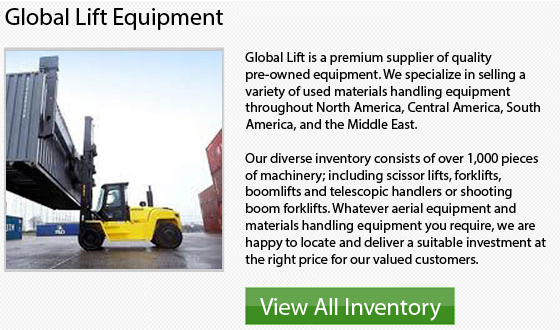
Each year in Phoenix, there are a few hundred forklift accidents which are reported. Although operator training is certainly the most vital part of avoiding workplace mishaps, it is not enough to lessen the number of incidences. Obviously, the best method to avoiding lift truck mishaps is having the organization and company involved, as well as combining the efforts of each and every person in the facility.
Toyota has implemented the SAS or System of Active Stability, which is technology derived from the automotive technology. The SAS can electrically control and monitor lift truck operations. This specific system is vital for helping reduce the chance of mishaps from happening. Whenever the SAS system detects any kind of instability, its advanced sensors signal simultaneously and engage the proper controller. Both the Active Mast Function Controller and the Active Control Rear Stabilizer help to avoid accidents or injuries happening by adding stability.
The patented technology provided by Toyota's SAS system is in place to detect many factors that result in potential lateral instability. If and when those conditions are detected, the SAS immediately locks a hydraulic cylinder on the rear steer axle. If this situation occurs, the stability footprint of the forklift changes to a rectangular in shape from a triangular in shape, resulting in added stability. The result is an instant stability and greatly lessens the chance of a lateral overturn from happening.
The SAS system engages instantly, when the machine detects the occurrence of instability. Next, the Swing Lock Cylinder is engaged and the rear axle becomes stabilized. This creates the lateral stability the equipment requires to help lessen the chance of lateral tip-overs from occurring.
The active mast function is similar in operation to the active rear stabilizer control. The active mast function controller system uses the same patented technology to sense numerous things which lead to potential longitudinal instability. Whenever the SAS controller senses potential longitudinal instability from occurring, 2 systems become engaged to help decrease the possibilities of forward and rearward tip-over accidents from occurring: the forward tilt angle control and the rear tilt speed control.
The Forward Tilt Angle Control will sense load weight and mass height, then automatically override the operator's manual control and limit forward tilt to decrease the chance of tipping the lift truck forward or spilling a load. All these safety devices are in place to help the operator stay safe.
Using the same load sensors and mast height sensors, the rear tilt speed control is designed to govern the mast's reverse tilt speed to half. This greatly lessens the chances of spilling unsecured cargo or having the lift truck tilt backwards.